
Table of Contents
- How to Improve Skin Texture Naturally: A 7-Step Routine
- Step 1: Start With Gentle Exfoliation to Boost Cell Turnover
- Step 2: Use the Best Ingredients for Skin Texture
- Step 3: Exfoliation Best Practices for Sensitive Skin
- Step 4: Repair and Protect Your Skin Barrier
- Step 5: Add Daily Sun Protection and Antioxidants
- How Long to Improve Skin Texture
- Conclusion
- Frequently Asked Questions
Last Updated: September 17, 2026
How to Improve Skin Texture Naturally: A 7-Step Routine
Rough, uneven skin isn't something you have to live with or fix only in a dermatologist's office. Learning how to improve skin texture naturally comes down to seven at-home steps, and results build week by week.
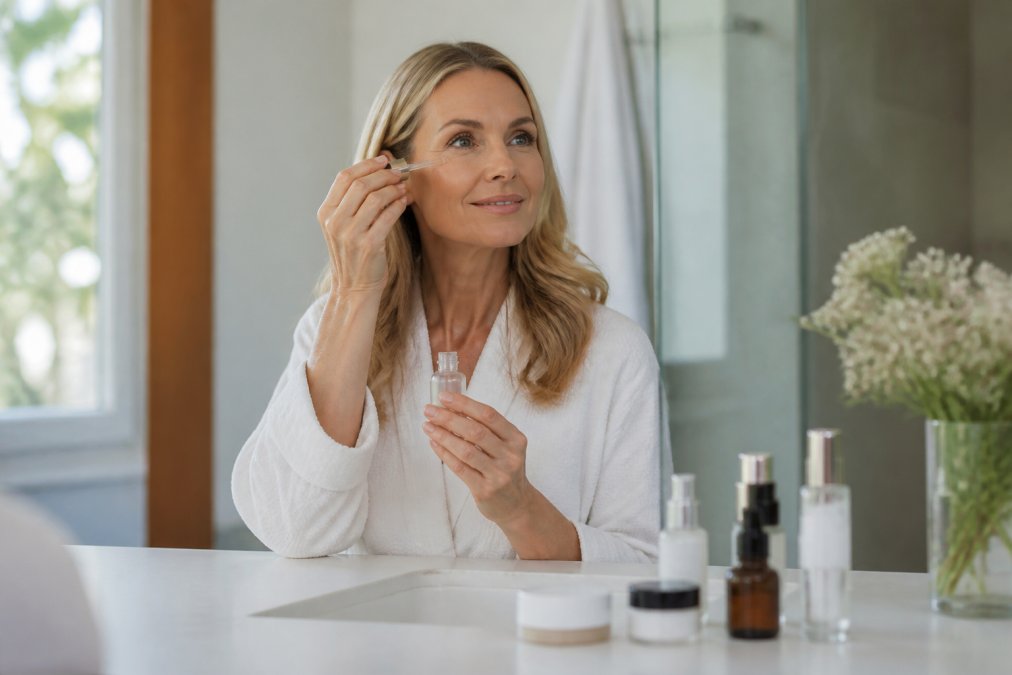
At Sobel Skin Rx, our formulas were built around one idea: you don't need a dermatologist's chair to get smoother, healthier-looking skin.
Step 1: Start With Gentle Exfoliation to Boost Cell Turnover
Exfoliation removes dead surface cells so fresh skin shows through. It's the fastest way to improve skin texture, but only if you do it gently.
Exfoliation comes in two forms, and they work differently:
| Type | How It Works | Best For | Watch Out For |
|---|---|---|---|
| Chemical | Dissolves dead cells with acids | Most skin types | Overuse causes stinging |
| Physical | Buffs cells with grains or tools | Oily, resilient skin | Microtears if too rough |
| Enzyme | Digests dead cells with fruit enzymes | Sensitive skin | Milder, slower results |
Chemical vs. Physical Exfoliants
Physical scrubs feel satisfying but can be easy to overdo. Chemical exfoliants can be more predictable because you control strength and contact time.
Step 2: Use the Best Ingredients for Skin Texture
The best ingredients for skin texture are retinoids, peptides, and niacinamide. Each targets a different part of the problem, covering more ground together than any single product.
Here's what each one does:
- Retinoids speed up cell turnover and support collagen production
- Peptides help skin hold onto moisture and stay firm
- Niacinamide calms redness and shrinks the look of pores
Retinoids, Peptides, and Niacinamide
Start with one active at a time. Add retinol at night two or three times a week, then build up. Once skin adjusts, layer in a morning niacinamide serum. Peptides work well in a moisturizer, where they hold water in.
Step 3: Exfoliation Best Practices for Sensitive Skin
Follow these rules:
- Start with a low-strength lactic acid once a week
- Never exfoliate on the same night as retinol
- Skip exfoliation if skin is red, raw, or stinging
- Always follow with a moisturizer within a minute
Our 27% Glycolic Acid Facial Cleanser removes surface oil and debris while helping the skin to feel smooth, re-texturized and hydrated.

Step 4: Repair and Protect Your Skin Barrier
Your skin barrier is the outermost layer of skin, built like a brick-and-mortar wall. The "bricks" are skin cells called corneocytes; the "mortar" is a mix of lipids, ceramides, cholesterol, and free fatty acids, sealing the gaps. When the mortar thins, water escapes and irritants walk in, and texture turns rough, flaky, and reactive no matter how many actives you layer on top.
How to Tell Your Barrier Is Compromised
A damaged barrier has a recognizable signature. Look for:
- Tight, shiny skin within minutes of washing, even with a gentle cleanser
- Stinging or burning from products that used to feel neutral (plain moisturizer, water, sunscreen)
- Flaky patches that don't respond to more moisturizer
- Sudden dullness and a gray, ashy cast
- Redness that flares with heat, wind, or a new product
- Texture that feels worse after exfoliation instead of better
If two or more sound familiar, stop all active ingredients, retinoids, AHAs, BHAs, vitamin C, for at least seven days. Continuing to exfoliate over a compromised barrier deepens the damage and can take weeks longer to reverse.
30% Glycolic Acid Peel Concentrate →
The Barrier Reset Protocol
A barrier reset is deliberately boring. For one to two weeks, your routine is three steps:
- Cleanse with a non-foaming, fragrance-free cleanser. If your skin feels tight after, the cleanser is too strong, switch to a cream or milk formula.
- Moisturize with a non-comedogenic moisturizer built around ceramides, cholesterol, and fatty acids. Glycerin and hyaluronic acid pull water in; ceramides hold it there.
- Protect with a broad-spectrum sun protection product every morning. UV slows barrier recovery, so skipping SPF stretches the timeline.
What to Add Back, and in What Order
After one to two weeks, if skin no longer stings and tightness has eased, reintroduce one product at a time:
- Week 1-2: Cleanser, moisturizer, SPF only
- Week 3: Add a niacinamide serum in the morning. It calms redness and supports the barrier's lipid production.
- Week 4: Add a low-strength lactic acid once a week, at night
- Week 5-6: Add retinol two nights a week, never on the same night as the acid
Ingredients That Rebuild vs. Ingredients That Strip
Not every "hydrating" product helps a barrier. Some actively work against it.
| Supports Barrier Repair | Undermines Barrier Repair |
|---|---|
| Ceramides, cholesterol, fatty acids | High-concentration alcohol (denatured, SD alcohol) |
| Glycerin, hyaluronic acid, panthenol | Physical scrubs with rough grains |
| Niacinamide, peptides, squalane | Daily acid toners |
| Fragrance-free occlusives (petrolatum, shea) | Essential-oil-heavy "natural" formulas |
| Oat extract, allantoin, madecassoside | Hot water and harsh foaming cleansers |
Step 5: Add Daily Sun Protection and Antioxidants
Sun protection is the single most important step for long-term texture. UV breaks down collagen production and skin elasticity, turning smooth skin rough over time.
How Long to Improve Skin Texture
Most people see real texture change in 8 to 12 weeks. Cell turnover slows with age, so surface smoothing shows up first, often within two to four weeks. Deeper changes, like fine lines and firmness, take longer.
Diagnose Your Texture Type First
Run your fingertips across your face in good light. Then match what you feel to one of these:
| What You Notice | Likely Cause | Primary Lever | Realistic Timeline |
|---|---|---|---|
| Small, raised bumps; clogged pores; blackheads | Acne-driven texture from sebum production and dead cells trapping oil | Salicylic acid, niacinamide, non-comedogenic moisturizer | 4-8 weeks |
| Dry, flaky, sandpaper feel; makeup catches | Slowed cell turnover plus a compromised barrier | Gentle lactic acid, ceramides, retinol at low strength | 6-12 weeks |
| Visible pores on nose and cheeks; orange-peel look | Loss of collagen production and skin elasticity around pore walls | Retinoids, Vitamin C, daily SPF | 12 weeks and beyond |
| Uneven tone with rough patches | Sun damage and accumulated dead-cell buildup | Antioxidants, SPF, periodic chemical exfoliation | 8-16 weeks |
| Texture that flares and clears on a cycle | Hormonal shifts affecting oil and turnover | Barrier support first, then targeted actives | Varies by cycle |
Why Hormones Change the Timeline
Hormonal shifts affect both sebum production and cell turnover, so texture can improve for two weeks then stall for no obvious reason. A common pattern: oilier, more congested skin before a cycle, then a calmer stretch. If your texture follows that rhythm, don't change your routine mid-flare, hold steady, keep the barrier supported, and judge results across a full month.
A Realistic Timeline
- Weeks 1-2: Skin feels softer and more hydrated. This is moisture, not turnover, don't mistake it for the finish line.
- Weeks 4-6: Tone looks more even, pores look smaller, bumps start to flatten.
- Weeks 8-12: Texture smooths, fine lines soften, radiance improves.
- Beyond 12 weeks: Firmness and elasticity keep improving as collagen production catches up.
For stubborn uneven skin tone and sun damage, a targeted treatment can speed things up. Our 30% Glycolic Acid Peel Concentrate delivers in-office peel results at home, with no downtime, and visibly minimizes enlarged pores. Use it only after your barrier is stable, a peel on compromised skin sets you back, not forward.

Conclusion
Getting smoother skin isn't about one miracle product. It's about exfoliating gently, feeding skin the right active ingredients, repairing your barrier, and protecting it daily.
Frequently Asked Questions
How long does it take to improve skin texture?
Most people see meaningful changes in skin texture within 4 to 6 weeks of consistent care, though deeper improvements in tone and smoothness can take 8 to 12 weeks. That timeline reflects the skin's natural cell turnover cycle, which runs about 28 days in younger skin and slows with age. Ingredients like glycolic acid and retinol speed surface renewal, but they need several cycles to visibly reduce dullness and soften rough patches. Stick with a routine for at least two months before judging results.
What are the best ingredients for skin texture?
The most effective ingredients for smoothing skin texture include glycolic acid, lactic acid, and salicylic acid for exfoliation; retinol to support collagen production and cell turnover; niacinamide to reinforce the skin barrier and minimize pores; and vitamin C for antioxidant protection and radiance. Peptides also help by supporting skin elasticity. A routine that pairs a gentle exfoliant with a retinol at night and an antioxidant serum in the morning covers the main pathways to smoother, more even skin.
Can you rebuild collagen in your skin naturally?
You cannot fully replace lost collagen, but you can support your skin's own collagen production. Retinoids are the most studied ingredient for this, and they work by encouraging cell turnover and stimulating collagen synthesis over time. Vitamin C also plays a role because it supports collagen formation and protects against free radical damage. Sun protection matters just as much, since UV exposure breaks down collagen faster than the body can rebuild it. Consistent use of these ingredients, plus daily SPF, gives your skin the best chance to maintain firmness.
What causes textured skin?
Textured skin usually comes from a combination of slow cell turnover, clogged pores, dehydrated skin, sun damage, and hormonal shifts. When dead cells build up on the surface, skin looks dull and feels rough. Excess sebum can enlarge pores, and a compromised skin barrier leads to uneven tone and flakiness. Hormonal changes, especially around menopause, reduce collagen and elastin, which makes texture worse. Addressing these root causes with exfoliation, hydration, and barrier repair is more effective than treating surface symptoms alone.

Comments (0)
Back to Beauty