
Table of Contents
- What to Look for in a Fragrance-Free Anti-Aging Serum
- Dermatologist Recommended Anti Aging Serum: Why Formulation Matters
- Best Ingredients for Anti Aging Serums That Actually Work
- How to Layer Serums in Your Skincare Routine
- Ingredient Interaction Safety: What Not to Mix
- Budget vs. Luxury: Does Price Determine Efficacy?
- Conclusion: Choosing the Best Fragrance-Free Anti-Aging Serum for You
- Frequently Asked Questions
Last Updated: September 17, 2026
What to Look for in a Fragrance-Free Anti-Aging Serum
The best fragrance free anti aging serum starts with one non-negotiable rule: no added fragrance, no "parfum," no masking scent. Fragrance is the leading cause of contact dermatitis in skincare, and for anyone with sensitive skin or rosacea, it can undo months of progress in a single application.
So what separates a genuinely effective serum from a well-marketed one? Four things matter most:
- A short, active-led ingredient list. Look for retinol alternatives, peptides, and antioxidants near the top, not buried after fillers.
- pH-balanced, non-comedogenic formulation. This supports serum absorption without clogging pores or disrupting the lipid barrier.
- Dermatologist-tested, hypoallergenic labeling. These claims mean the formula was assessed for irritation risk, not just that it avoids obvious irritants.
- No masking fragrance. Some brands add scent-masking agents that behave like fragrance on reactive skin. Read the full INCI list.
According to the American Academy of Dermatology's guidance on sensitive skin, fragrance-free and unscented are not the same thing, a distinction most shoppers miss. Unscented products can still contain fragrance chemicals.
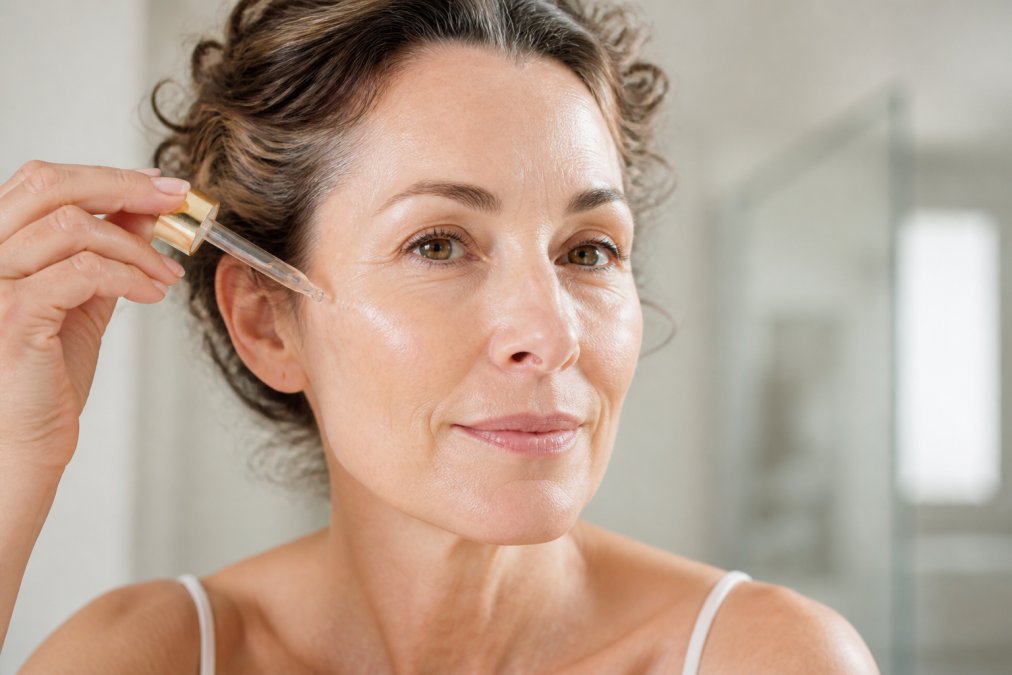
Dermatologist Recommended Anti Aging Serum: Why Formulation Matters
Formulation decides whether a dermatologist recommended anti aging serum actually performs. Two products can list identical active ingredients and deliver completely different results based on concentration, delivery system, and how the formula interacts with your skin barrier.
Concentration is the first variable. A peptide blend at a meaningful percentage supports collagen production; the same peptide at trace levels does little. Delivery matters just as much. Encapsulated actives release slowly, which reduces irritation while maintaining skin rejuvenation over time.
Here's the part most guides skip: formulation also determines whether a serum helps or harms a compromised barrier. Harsh penetration enhancers speed absorption but strip the lipid barrier, leaving skin more reactive. A well-built serum balances potency with tolerability.
Formulas built by clinicians tend to prioritize clinical efficacy and barrier repair over sensory experience, which is exactly what sensitive skin needs.
Best Ingredients for Anti Aging Serums That Actually Work
The best ingredients for anti aging serums fall into four functional groups: retinoids for cell turnover, peptides for firming, antioxidants for environmental defense, and humectants for hydration. Each targets a different part of the aging process, and each behaves differently on sensitive or reactive skin.
Retinoids remain the reference standard for wrinkle reduction and texture. They bind retinoic acid receptors in the skin, accelerate cell turnover, and stimulate collagen production in the dermal layer. The trade-off is tolerability: the same receptor activity that remodels skin can trigger redness, flaking, and barrier disruption during the adjustment period. That is why concentration and delivery format matter as much as the ingredient name.
Peptides act as signaling molecules. Short chains like matrixyl (palmitoyl pentapeptide-4) and copper tripeptide-1 tell skin to build more collagen and elastin. Peptides are often better tolerated than retinoids, which can make them a reasonable bridge for anyone who cannot yet handle a retinoid. The catch is that peptide efficacy is dose-dependent, a blend listed near the bottom of an INCI list is likely present at a fraction of a percent.
Antioxidants, including vitamin C derivatives such as sodium ascorbyl phosphate and tetrahexyldecyl ascorbate, neutralize free radicals from UV and pollution and help brighten uneven tone.
Reading the INCI List Like a Formulator
Ingredient order is not arbitrary. Under U.S. labeling rules, ingredients are listed in descending order of concentration down to about 1%, after which order is flexible. That single fact changes how you read a label:
- If a peptide or antioxidant appears after the preservative (often phenoxyethanol), it is likely present at 1% or less.
- "Fragrance" or "parfum" can appear anywhere on the list, including near the end, and still trigger contact dermatitis in reactive skin.
- Masking agents such as benzyl acetate or linalool are sometimes added to cover the smell of raw actives, they function like fragrance even when the front label says "unscented."
Retinol Alternatives for Sensitive Skin
- Bakuchiol, a plant-derived active studied for supporting cell turnover and collagen signaling without the peeling associated with retinol.
- Retinyl esters (retinyl palmitate, retinyl propionate), milder retinol forms that convert to retinoic acid slowly in the skin, spreading the effect over time.
- Plant stem cells, which support antioxidant defense and skin rejuvenation rather than acting as true retinoids.
- Peptide complexes, which build collagen through signaling rather than turnover.
How to Layer Serums in Your Skincare Routine
Knowing how to layer serums in your skincare routine prevents wasted product and irritation. The rule is simple: thinnest to thickest, water-based before oil-based.
Here's a practical order that works for most people:
- Cleanse and pat skin almost dry.
- Apply water-based serums first, like vitamin C or hyaluronic acid, while skin is slightly damp.
- Follow with treatment serums, such as a retinol alternative or peptide serum.
- Seal with moisturizer to lock in hydration and support the lipid barrier.
- Finish with SPF in the morning, every time.
Ingredient Interaction Safety: What Not to Mix
Ingredient interaction safety is the most overlooked part of serum layering. Some pairings cancel each other out. Others cause irritation that takes weeks to calm.
The main conflicts to watch:
- Retinoids plus strong acids. Combining retinol with glycolic or salicylic acid in the same routine increases irritation and can compromise the barrier.
- Vitamin C plus retinoids. Both are potent; layering them at once often triggers redness. Use vitamin C in the morning and retinol at night.
- Benzoyl peroxide plus retinol. Peroxide can deactivate retinol, wasting both products.
Budget vs. Luxury: Does Price Determine Efficacy?
Price does not determine efficacy, but it does track specific cost drivers that shoppers can actually evaluate. Understanding those drivers is the fastest way to decide whether a given serum is worth its shelf price, and it is the angle most roundups skip entirely.
What You Are Actually Paying For
Four cost drivers separate a $15 drugstore serum from a $150 clinical one:
- Active concentration. A peptide at 5% costs dramatically more to formulate than the same peptide at 0.5%. Because U.S. labeling only requires descending order down to about 1%, a brand can list a hero ingredient prominently without disclosing how much is in the bottle.
- Delivery and encapsulation. Encapsulated retinol, liposomal vitamin C, and time-release systems cost more to manufacture but reduce irritation and improve stability. This is the single biggest reason a luxury retinol can feel gentler than a budget one at the same nominal strength.
- Stability testing and packaging. Vitamin C oxidizes on contact with light and air. Airless pumps, opaque glass, and accelerated stability testing add cost, and they are the difference between a serum that works in month three and one that has already turned brown.
- Clinical testing and preservative systems. Fragrance-free formulas are harder to stabilize because fragrance often masks the smell of raw actives. A brand that removes fragrance has to solve that problem another way, which costs money.
Where Budget Formulas Genuinely Compete
For hydration, barrier support, and mild antioxidant defense, some lower-cost options can perform well.
The Sensitive-Skin Calculation
For reactive or contact-dermatitis-prone skin, the math changes. A cheap formula that triggers a flare costs more in the long run, in recovery time, in replacement products, and in the risk of compounding barrier damage, than a well-built one that simply works. Tolerability is not a luxury feature; it is the baseline requirement.
FDA guidance on cosmetic labeling and ingredient order
Conclusion: Choosing the Best Fragrance-Free Anti-Aging Serum for You
The right serum comes down to three checks: no fragrance, actives that match your concern, and a formula your barrier tolerates. Skip any one and you'll likely be shopping again in a few months. For sensitive skin especially, tolerability is not a bonus, it is the foundation.
Frequently Asked Questions
What is the highest rated anti-aging serum for sensitive skin?
The highest rated options for sensitive skin are fragrance-free formulas that combine gentle actives like peptides, hyaluronic acid, and vitamin C derivatives without alcohol or essential oils. Look for products labeled hypoallergenic and non-comedogenic, and always patch test before full application. Dermatologist-developed serums that avoid common irritants tend to score best with users who have rosacea or contact dermatitis.
Is there a hydrating serum that doesn't have any fragrance?
Yes, many hydrating serums are formulated without fragrance. Check the ingredient list for masking fragrance, which can hide irritating compounds. A fragrance-free hydrating serum often uses humectants like hyaluronic acid or glycerin to pull water into the skin. These are ideal for layering under anti-aging serums to boost hydration without risking irritation.
How long does it take to see results from a fragrance-free anti-aging serum?
Most users notice improved hydration and skin texture within two to four weeks. Visible reduction in fine lines and wrinkles typically takes eight to twelve weeks of consistent use, as collagen production and cell turnover are gradual processes. Results depend on the concentration of active ingredients and how well the serum is layered with other products.
Can I use a fragrance-free anti-aging serum if I have rosacea?
Yes, but choose formulas with soothing ingredients like niacinamide or ceramides and avoid strong exfoliants. Fragrance-free products reduce the risk of contact dermatitis, which is common in rosacea-prone skin. Introduce the serum slowly, patch test on your inner arm first, and consult a dermatologist if you experience persistent redness or irritation.
Choosing a serum for sensitive skin means balancing potency against tolerability, and most products force you to pick one. Sobel Skin Rx removes that trade-off with dermatologist-developed, fragrance-free formulas that deliver concentrated actives without the irritants. Get started with Sobel Skin Rx and build a clean, science-backed routine for firmer, smoother-looking skin.

Comments (0)
Back to Beauty