
Table of Contents
- What Clinical Data Actually Means in Anti-Aging Skincare
- How to Evaluate Skincare Clinical Trials: What Separates Real Evidence from Marketing
- Evidence-Based Anti-Aging Ingredients: What the Research Shows
- Retinol Clinical Studies for Wrinkles: Depth, Duration, and Real Results
- How to Read Skincare Clinical Trial Results and Spot Red Flags
- Translating Clinical Data Into Your Skincare Routine
- Frequently Asked Questions
Last Updated: October 15, 2026
What Clinical Data Actually Means in Anti-Aging Skincare
Clinical data for anti aging skincare refers to measurable evidence gathered through structured studies that demonstrate how a product affects your skin.
At Sobel Skin Rx, we believe clinical evidence separates products that actually work from those that merely promise results. A claim like "reduces fine lines" means little without knowing how much reduction occurred, in how many people, and over what timeframe.
The challenge is that clinical data gets misrepresented constantly. A study might show statistically significant improvement that's barely visible, or use a control group so weak that almost any treatment appears effective.
How to Evaluate Skincare Clinical Trials: What Separates Real Evidence from Marketing
The difference between rigorous clinical evidence and marketing theater comes down to study design. A poorly constructed trial can make any ingredient look impressive; a well-designed one reveals whether improvements are real and lasting.
Study Design and Sample Size
A credible trial specifies how many participants enrolled, how long it lasted, and whether it was randomized. Sample sizes of 30 or more provide more reliable results than pilot studies with 10-15 people.
Open-label studies, where everyone knows who received the active treatment, introduce bias. The best trials use double-blind designs, which eliminate the placebo effect, responsible for 20-40% of perceived improvement in subjective assessments.
Watch for studies that exclude certain skin types. If a retinoid trial only tested fair skin, you can't apply those results to deeper tones, where irritation patterns differ.
Measurement Methods and Objective Assessment
How researchers measure change matters enormously. Subjective ratings are vulnerable to bias and observer variation. Objective measurement uses instruments: replica tape for wrinkle depth, profilometry for texture, or colorimetry for melanin and redness.
The gold standard combines methods: profilometry, standardized photography, and blinded evaluator ratings. If all three align, the evidence is strong. If only subjective ratings improve while objective measures don't, that's a red flag.
Baseline measurements matter too. A trial should measure skin before treatment begins, then at consistent intervals (often 4, 8, and 12 weeks). Without baseline data, claims of improvement are meaningless.
Control Groups and Baseline Comparisons
A control group receiving a placebo or established treatment is non-negotiable. Without it, you can't tell whether skin improved because of the product or because of time and seasonal changes. The best trials use active controls, comparing a new retinoid against an established one.
Statistical significance and visible improvement aren't the same thing. A peptide serum might show a statistically significant 8% hydration improvement over placebo, mathematically real, but imperceptible to the eye. Look for effect sizes and clinical meaningfulness, not just p-values.
Evidence-Based Anti-Aging Ingredients: What the Research Shows
Three ingredient categories have the strongest clinical support for reducing visible signs of aging: retinoids, peptides with hydrating actives, and antioxidants targeting tone and brightness.
Retinoids and Wrinkle Reduction
Retinoids, vitamin A derivatives including retinol, retinaldehyde, and prescription tretinoin, have decades of clinical evidence supporting their ability to decrease wrinkle depth and length by increasing cell turnover and stimulating collagen. The Sobel Skin Rx 4.5% Retinol Night Treatment harnesses this mechanism with a concentrated formulation that minimizes irritation through our proprietary SD-100 delivery system.

Studies consistently show retinoids reduce wrinkle depth measurably. A 12-week trial typically demonstrates 15-25% improvement in fine lines when measured objectively, with most visible change occurring in the first 8-12 weeks. Prescription retinoids work faster, but retinol remains effective when formulated correctly.
Durability matters: retinoid benefits plateau rather than disappear entirely. Your skin won't revert to baseline immediately, but wrinkles gradually deepen again over months if you discontinue treatment, which is why retinoids work best as a long-term commitment.
4.5% Retinol Night Treatment →
Peptides, Hydration, and Skin Texture
Peptides are short amino acid chains that signal skin cells to produce more collagen and elastin. The research is mixed, some show modest firmness and texture benefits, others deliver little beyond their hydrating base.
Hydration is underrated in anti-aging routines. Dehydrated skin looks more wrinkled because fine lines become more pronounced when the barrier is compromised.
Texture improvements, reduced roughness, refined pores, often result from hydration combined with gentle exfoliation or cell-turnover ingredients. Trials measure texture via replica tape or profilometry, and improvements often appear within 4 weeks, before wrinkle reduction.
Antioxidants and Skin Tone
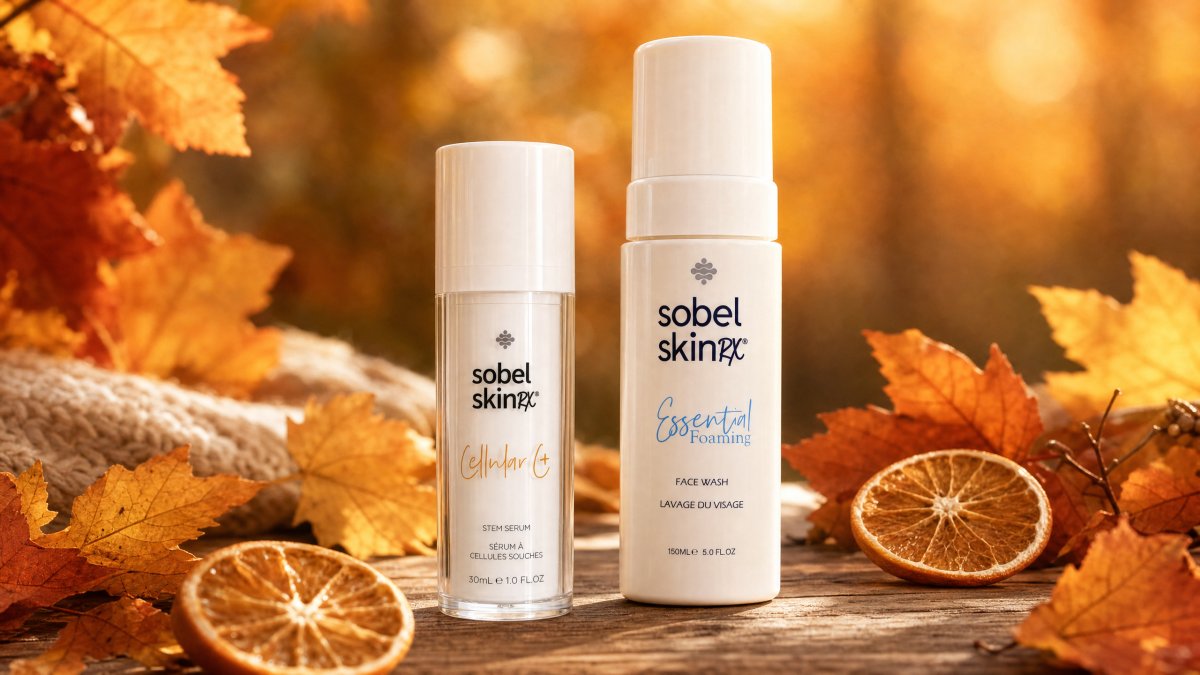
Antioxidants like vitamin C, resveratrol, and plant extracts neutralize free radicals and reduce oxidative stress. The Cellular C+ STEM SERUM pairs stable vitamin C with orange stem cells to address dull, uneven tone and support collagen. Evidence for brightening is solid, though more modest than retinoids.
Vitamin C studies show measurable brightness improvements and dark spot reduction over 8-12 weeks, typically 10-20% improvement in melanin distribution and redness. Antioxidants work best for prevention and maintenance rather than dramatic transformation.
Retinol Clinical Studies for Wrinkles: Depth, Duration, and Real Results
Retinol clinical studies measure wrinkle depth using standardized scales, usually on the forehead and around the eyes. Depth is measured in micrometers, the smaller the number, the less pronounced the line.
A typical 12-week retinol study shows baseline fine-line depth of 100-150 micrometers, decreasing to 75-115 micrometers after treatment, a 15-30% reduction.
Duration matters. Most studies run 8-12 weeks because that's when visible plateau occurs; continuing beyond produces diminishing returns.
Results vary by skin type and age. Younger skin (30s-40s) improves faster because it retains more elasticity; mature skin (50s-60s) responds more slowly on deeper wrinkles.
How to Read Skincare Clinical Trial Results and Spot Red Flags
When you encounter a clinical study backing a skincare claim, ask these questions immediately.
Statistical Significance vs. Visible Improvement
Statistical significance means the result is unlikely to have occurred by chance, not that it's large or visible. A statistically significant 5% hydration improvement may be imperceptible to your skin.
Look for effect sizes and confidence intervals, not just p-values. A p-value of 0.05 paired with a 95% confidence interval of 2-8% improvement tells you the true change is probably between 2-8%.
Red flag: claims of "clinically proven" improvement without specifying the actual percentage or measurement. A 3% improvement in skin firmness might be statistically significant but invisible in the mirror.
Durability After Treatment Stops
Few skincare studies measure what happens after you stop using the product, a major gap. A retinol might show impressive wrinkle reduction at week 12, but how quickly does improvement fade after you discontinue it?
Research suggests retinoid benefits persist 3-6 months after stopping, then decline. Hydration benefits disappear within days. Antioxidant benefits fall in between. Look for studies with a washout period where participants stop treatment and skin is reassessed.
Red flag: no mention of what happens after treatment ends. The company may be hiding poor durability data.
4.5% Retinol Night Treatment →
Safety Across Skin Types and Sensitivities
Clinical trials often recruit participants with similar skin characteristics, which limits applicability. A retinoid trial conducted on 40 people with fair skin tells you nothing about safety and efficacy for people with darker skin tones, who may experience more irritation or post-inflammatory hyperpigmentation.
Sensitive skin and rosacea-prone skin should have dedicated safety data. Irritation rates, redness scores, and barrier function measurements matter.
Red flag: a study that excludes people with sensitive skin or only tests on one demographic. You can't generalize results to populations not represented in the trial.
Translating Clinical Data Into Your Skincare Routine
Understanding clinical evidence doesn't mean you need a PhD in dermatology. It means asking three practical questions before buying.
First: Does this product have clinical data, and is it from an independent study or company-funded research? Company-funded studies aren't automatically unreliable, but they do warrant extra scrutiny for bias.
Second: What specific improvement does the data show? Not "reduces wrinkles" but "decreases wrinkle depth by 20% over 12 weeks." Quantified claims are more credible than vague ones.
Third: Does this improvement match your skin concern and timeline?
Start with one active ingredient, typically a retinoid like the 4.5% Retinol Night Treatment if wrinkles are your primary concern, or a hydrating peptide treatment like the Triple Oligo Peptide Eye Cream for texture and firmness.

Clinical evidence transforms skincare from guesswork into informed decision-making.
| Ingredient | Primary Benefit | Clinical Timeframe | Best For |
|---|---|---|---|
| Retinol (4.5%) | Wrinkle depth reduction | 8-12 weeks | Fine lines, moderate wrinkles |
| Peptides | Firmness, texture refinement | 4-8 weeks | Loss of elasticity, roughness |
| Hyaluronic Acid | Hydration, plumping | 2-4 weeks | Dehydrated skin, fine line appearance |
| Vitamin C | Tone evening, brightness | 8-12 weeks | Dullness, dark spots, uneven tone |
| Study Quality Indicator | What It Means | Red Flag |
|---|---|---|
| Double-blind, randomized | Neither participant nor evaluator knows who received active treatment | Open-label or self-selected groups |
| Sample size 30+ | Larger population reduces chance variation | Fewer than 15 participants |
| Objective measurement | Wrinkle depth, hydration measured by instruments | Only subjective visual assessment |
| Diverse demographics | Results applicable across skin tones and types | Only fair skin tested |
| Baseline comparison | Before-and-after measurement from starting point | No baseline data provided |
| Active control group | Compared against established treatment, not just placebo | Placebo-only comparison |
Frequently Asked Questions
What counts as clinical evidence for anti-aging skincare?
Clinical evidence for anti-aging skincare includes peer-reviewed studies, multi-center trials, and objective measurements of wrinkle depth, skin texture, and firmness. Real clinical data shows results from a treatment group compared to a control group, with baseline measurements taken before treatment and follow-up assessments at set intervals. Studies published in dermatology journals and backed by independent testing carry more weight than brand-funded marketing claims alone.
How do clinical trials test anti-aging skincare products and measure wrinkle reduction?
Clinical trials measure wrinkle reduction through multiple methods: visual assessment by dermatologists, high-resolution imaging to track wrinkle depth and length, skin texture analysis, and sometimes tactile assessment. Participants receive baseline photos and measurements before treatment, then return for follow-up visits at 4, 8, 12 weeks or longer. Objective tools like profilometry measure skin surface roughness, while subjective assessments capture how visible changes appear to trained observers and the participants themselves.
Which anti-aging ingredients have the strongest clinical data for reducing wrinkles?
Retinoids have the most robust clinical evidence for wrinkle reduction, with studies showing decreased wrinkle depth and length over 8-12 weeks of use. Peptides demonstrate clinical support for skin firmness and hydration, which improve the appearance of fine lines. Vitamin C and other antioxidants show evidence for brightening and supporting collagen production. Hyaluronic acid and humectants improve skin hydration and plumpness, which can visibly reduce the appearance of fine lines, though results are less dramatic than retinoids.
How can I tell if a skincare clinical study is reliable and not just marketing?
Look for studies with adequate sample size (typically 20+ participants), a control group or baseline comparison, objective measurement methods, and published results in peer-reviewed journals. Red flags include small sample sizes, lack of control groups, only before-and-after photos without measurements, and studies funded and conducted entirely by the brand. Multi-center studies and independent testing carry more credibility. Check whether the study discloses potential conflicts of interest and whether results showed statistical significance, not just marketing claims.
How long do anti-aging skincare products typically take to show clinical results?
Most clinical trials measure visible results in 4-12 weeks of consistent use. Retinoids typically show measurable improvements in wrinkle depth and texture by 8-12 weeks. Hydrating ingredients and peptides may show improvements in skin firmness and smoothness within 4-8 weeks. However, results vary by individual skin type, baseline condition, and product concentration. Clinical studies often continue for 12-24 weeks to assess durability and longer-term changes in skin thickness and elasticity.
What's the difference between dermatologist-developed and clinically proven skincare?
Dermatologist-developed means a board-certified dermatologist created the formula, which signals professional expertise and understanding of skin science. Clinically proven means the product has undergone clinical testing with measurable, documented results compared to baseline or control. A product can be dermatologist-developed without clinical trials, and vice versa. The strongest claim combines both: formulas developed by dermatologists and then tested in clinical trials with published evidence of efficacy and safety.
Can clinical study results guarantee the same results for me?
No. Clinical trial results represent average outcomes across a tested group, but individual results vary based on age, skin type, baseline condition, genetics, lifestyle, and consistency of use. A study showing 30% improvement in wrinkle depth means some participants improved more and some less. Results may also differ if you use the product differently than the trial protocol specified. Clinical data tells you what's possible and likely, not what's guaranteed for your unique skin.

Comments (0)
Back to Beauty