
Table of Contents
- Understanding Dull Skin: Causes and Signs
- Best Skincare Ingredients for Dull Skin
- Building a Skincare Routine for Dull Skin
- How Long Does It Take to Improve Skin Texture
- Scheduling Active Ingredients Safely
- Science-Backed Skincare for Dull Skin: What Works
- Frequently Asked Questions
Last Updated: October 18, 2026
Understanding Dull Skin: Causes and Signs
Dull skin results from dead-cell buildup, reduced cell turnover, and inadequate hydration. When skin isn't renewing efficiently, it loses radiance and appears flat, tired, and uneven.
Visible signs include lack of luminosity, uneven texture, dark spots, and a lackluster appearance. Skin may feel rough, with more noticeable pores.
Identifying what causes your dullness guides ingredient and routine choices, some struggle with surface buildup alone, others with collagen breakdown and free radical damage.
Best Skincare Ingredients for Dull Skin
The most effective ingredients work through different mechanisms: exfoliating dead cells, stimulating turnover, and providing antioxidant protection and hydration. Combining them strategically addresses both immediate appearance and long-term skin health.
Glycolic Acid for Surface Renewal
Glycolic acid, an alpha hydroxy acid, dissolves the bonds holding dead cells to the surface, revealing fresher, brighter skin.
The 27% Glycolic Acid Facial Cleanser from Sobel Skin Rx combines cleansing with exfoliating action, removing excess oils and daily debris while smoothing texture.
Most people see brighter skin within 1-2 weeks. Start 2-3 times weekly if sensitive, then increase as skin adapts. Pair with consistent hydration and sun protection.
Vitamin C and Antioxidants for Radiance
Vitamin C brightens dull skin by neutralizing free radicals and supporting collagen production, restoring firmness and texture. A stable form penetrates the barrier effectively and delivers visible radiance within weeks.
The Cellular C+ STEM SERUM pairs stable vitamin C with orange stem cells to even tone, refine texture, and restore radiance.

Vitamin C works synergistically with other active ingredients, making it a cornerstone of science backed skincare for dull skin.
Niacinamide for Skin Resilience
Niacinamide (vitamin B3) strengthens the skin barrier, reduces inflammation, and supports collagen.
The 15% Niacinamide Gel Serum from Sobel Skin Rx revitalizes and firms skin while reducing the appearance of enlarged pores. At this concentration, niacinamide delivers noticeable improvements in skin texture and resilience.
Niacinamide is one of the most versatile ingredients in science-backed skincare for dull skin, addressing dullness, uneven tone, texture, and firmness without irritating most skin types.
Retinol for Cell Turnover
Retinol, a form of vitamin A, accelerates cell turnover and stimulates collagen and elastin, directly addressing a root cause of dull skin. By speeding up shedding and renewal, it restores radiance and improves texture over time.
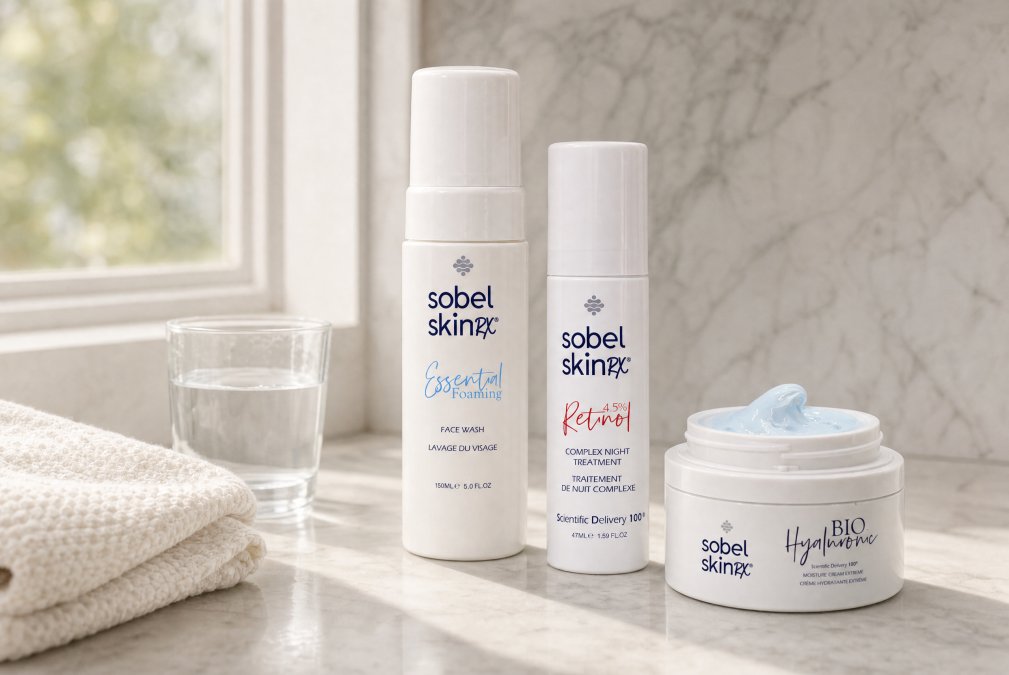
The 4.5% Retinol Night Treatment from Sobel Skin Rx is formulated with a patented delivery system for better absorption and time-released penetration without irritation.
Start 2-3 evenings per week, increasing as skin adapts. Full benefits take 8-12 weeks, though most notice improved radiance within 4-6.
Building a Skincare Routine for Dull Skin
A science-backed routine follows a logical sequence: cleanse, treat with actives, hydrate, and protect. Order determines how effectively each ingredient penetrates.
| Step | Product Type | Timing | Frequency |
|---|---|---|---|
| Cleanse | Gentle or exfoliating cleanser | Morning and evening | Daily |
| Treat | Vitamin C, glycolic acid, or retinol | After cleansing | 2-5 times per week |
| Hydrate | Niacinamide serum or moisturizer | After treatment | Daily |
| Protect | Sunscreen | Morning only | Daily |
Step 1: Cleanse with Exfoliating Action
Begin with a cleanser that removes debris without stripping. The 27% Glycolic Acid Facial Cleanser combines gentle cleansing with mild exfoliation, addressing surface dullness immediately.

Massage gently with lukewarm water for 30-60 seconds, then rinse. This prepares skin for actives and removes barriers to absorption. Sensitive skin should use it 2-3 times weekly, alternating with a gentler formula.
Step 2: Apply Targeted Brightening Serums
Apply your active while skin is slightly damp to enhance absorption and reduce irritation. If using vitamin C, apply the Cellular C+ STEM SERUM first and let it absorb 1-2 minutes before layering.
If rotating between glycolic acid and retinol, use glycolic acid 2-3 times per week in the evening, and retinol 2-3 times per week on alternate evenings. Never use both on the same night. The 15% Niacinamide Gel Serum can be used daily and pairs well with any active ingredient.
Step 3: Support with Hydration and Treatment
Follow actives with a hydrating serum or moisturizer to lock in benefits and support the barrier. Without hydration, dull skin returns quickly.
The Nighttime Anti-Aging Protocol bundles a foaming cleanser, peptide eye cream, and 4.5% retinol treatment into one coordinated evening routine, eliminating guesswork so actives work together synergistically.
How Long Does It Take to Improve Skin Texture
Timelines depend on the mechanism targeted, your baseline turnover rate, and consistency. Glycolic acid produces the fastest change, often 1-2 weeks, by removing the dead-cell layer that scatters light. Vitamin C and niacinamide show brightening within 4-6 weeks; retinol requires 8-12 weeks because it works through cellular regeneration.

These ranges assume near-daily use as directed. Skipping treatments or layering incompatible ingredients slows results or causes irritation. A plateau around week 6 is normal and usually resolves by week 12 with consistency.
How to Track Progress Objectively
Because dullness is perceptual, memory is unreliable. Standardize your observation conditions:
- Take photos in the same location, lighting, and distance every two weeks. Natural indirect daylight from a north-facing window is a common choice because it minimizes color casts.
- Keep a simple irritation log noting stinging, redness, or flaking after each active. This helps you distinguish a true lack of progress from a routine that is too aggressive.
- Use a consistent skincare journal to record which products you used on which days. If you rotate glycolic acid and retinol, note the rotation so you can correlate changes with specific actives.
Most people see best results after 12-16 weeks. If nothing changes after 8 weeks of consistent, correctly sequenced use, reassess your routine or consult a dermatologist to rule out conditions like rosacea, seborrheic dermatitis, or thyroid-related changes.
When Dullness May Need Medical Assessment
Not all dullness is cosmetic. Persistent or sudden changes in color, texture, or radiance, especially with itching, pain, or new growths, warrant clinical evaluation. Cosmetic dullness responds to exfoliation and brightening; medical dullness may signal something topical skincare can't resolve.
For science-backed skincare for dull skin to work effectively, you must use it regularly as directed. Sobel Skin Rx formulations are designed for consistent use, and you can save 20% on your first order with code WELCOME26.
Scheduling Active Ingredients Safely
Using multiple actives requires matching the schedule to your skin type, understanding how concentration and pH affect tolerability, and introducing actives one at a time. Dermatologists commonly start with one active for 2-4 weeks until skin adapts, then add the next, reducing irritation risk and making reactions easier to trace.
Ingredient Interactions at a Glance
- Vitamin C + niacinamide: Can be used together daily. Early concerns about interaction have not held up in practice; most formulations tolerate layering.
- Glycolic acid + retinol: Do not use on the same night. Both increase cell turnover and can cause excessive irritation when combined. Alternate evenings or use on different days.
- Vitamin C + glycolic acid: Can be used in the same routine if skin tolerates it, but apply vitamin C first and allow it to absorb. If stinging occurs, separate them into morning and evening.
- Retinol + benzoyl peroxide: Avoid layering directly; benzoyl peroxide can oxidize retinol and reduce efficacy. Use benzoyl peroxide in the morning and retinol at night if both are needed.
Concentration, pH, and Formulation Matter
An ingredient name alone doesn't guarantee results. Glycolic acid needs a pH below 4 to exfoliate effectively, and concentration affects efficacy and irritation. Vitamin C stability varies widely, packaging and formulation matter as much as percentage. Retinol concentration and delivery determine how quickly skin adapts. Start with the lowest frequency your skin tolerates and increase gradually.
Personalized Schedules by Skin Type
Dry or sensitive skin: Introduce one active at a time.
Oily or acne-prone skin: Vitamin C and niacinamide can be used daily. Glycolic acid 2-3 times per week in the evening helps with surface buildup and pore appearance.
Combination skin: Use vitamin C and niacinamide daily, glycolic acid 2 times per week on oily areas, and retinol 2 times per week on alternate evenings.
Mature skin (40+): Retinol is often the priority for cell turnover and collagen support.
A Practical Weekly Framework
A common starting schedule for skin that tolerates actives well:
| Day | Morning | Evening |
|---|---|---|
| Monday | Vitamin C + sunscreen | Glycolic acid |
| Tuesday | Vitamin C + sunscreen | Retinol |
| Wednesday | Vitamin C + sunscreen | Niacinamide |
| Thursday | Vitamin C + sunscreen | Glycolic acid |
| Friday | Vitamin C + sunscreen | Retinol |
| Saturday | Vitamin C + sunscreen | Niacinamide |
| Sunday | Vitamin C + sunscreen | Recovery (moisturizer only) |
Adjust frequency down if you experience stinging, redness, or flaking. Sunscreen is non-negotiable when using any of these actives, as they increase photosensitivity. Apply broad-spectrum SPF 30 or higher every morning, even if you're staying indoors.
Sobel Skin Rx formulations are designed to layer together, and you can save 20% on your first order with code WELCOME26.
Science-Backed Skincare for Dull Skin: What Works
Ingredients that deliver real results are backed by clinical evidence and formulated at effective concentrations. Sobel Skin Rx products are dermatologist-developed by board-certified dermatologist Dr.
What sets science-backed skincare apart is proven actives at appropriate concentrations, clean formulations free from unnecessary fillers, and clinical validation. The 4.5% Retinol Night Treatment is clinically proven to decrease the length and depth of lines and wrinkles while dramatically improving texture; the 30% Glycolic Acid Peel Concentrate delivers in-office-quality results at home.
Dull skin responds best to routines combining exfoliation, brightening, hydration, and protection. No single product solves dullness alone, it requires a coordinated approach.
Dull, uneven skin doesn't have to be permanent. The right actives, applied consistently and in the correct sequence, can restore radiance and improve texture within weeks.
Frequently Asked Questions
Which skincare ingredients can help improve dull-looking skin?
Glycolic acid removes dead skin cells and promotes cell turnover for immediate brightness. Vitamin C neutralizes free radicals and supports collagen production, evening tone over time. Niacinamide reinforces the skin barrier and improves resilience. Retinol accelerates cell renewal and boosts elasticity. These ingredients work best when combined in a consistent routine; the Cellular C+ STEM SERUM pairs vitamin C with orange stem cells for antioxidant defense, while the 30% Glycolic Acid Peel Concentrate provides intensive exfoliation without downtime.
How long does it take for science-backed skincare to improve dull skin?
Surface brightness can improve within 1-2 weeks of consistent exfoliation and hydration. Visible texture refinement typically appears within 4-6 weeks as cell turnover accelerates. Deeper improvements in skin tone evenness and radiance require 8-12 weeks of daily active ingredient use. Retinol-based treatments show cumulative benefits over 12+ weeks. Results depend on consistency, product concentration, and your baseline skin condition. Starting with the 27% Glycolic Acid Facial Cleanser delivers quick surface renewal, while layering the 4.5% Retinol Night Treatment supports longer-term structural improvements.
Can I use exfoliating acids and retinol together in my skincare routine?
Yes, but timing and frequency matter. Use glycolic acid products in the morning or 2-3 times weekly, then apply retinol at night on separate days to avoid over-exfoliation and irritation. Many people alternate: glycolic cleanser in the morning, retinol treatment at night 3-4 times per week, with hydrating serums on off-nights. Start conservatively if your skin is sensitive. The 27% Glycolic Acid Facial Cleanser works well as a morning step, while the 4.5% Retinol Night Treatment is designed for evening use. Always follow with hydration to support your skin barrier.
Does sunscreen help prevent dull skin?
Yes. UV exposure breaks down collagen, triggers hyperpigmentation, and accelerates surface damage that causes dullness. Daily SPF protects against free radical damage and prevents uneven tone from sun-induced discoloration. Sunscreen is essential after using active ingredients like glycolic acid and vitamin C, which increase photosensitivity. Consistent sun protection maintains the brightening results from your skincare routine and prevents new dullness from forming. Pair your active ingredients with a daily sunscreen to lock in radiance and prevent regression.

Comments (0)
Back to Beauty