
Table of Contents
- Why Clinical Strength Skincare Beats Drugstore Formulas for Acne and Wrinkles
- The Best Ingredients for Adult Acne and Wrinkles
- How to Improve Skin Texture Naturally With Clinical Actives
- Building a Clinical Strength Skincare Routine That Fits Your Skin
- Comparing Clinical Strength Options: What to Look For
- Common Mistakes When Using Clinical Strength Skincare for Acne and Wrinkles
- Conclusion: Your Next Step Toward Clearer, Firmer Skin
- Frequently Asked Questions
Last Updated: October 3, 2026
Why Clinical Strength Skincare Beats Drugstore Formulas for Acne and Wrinkles
Clinical strength skincare is a category of concentrated, dermatologist-developed formulations that deliver active ingredients at levels high enough to change skin behavior, not just moisturize it. At Sobel Skin Rx, we build every formula around that principle. The difference shows up in how the product works, not just what it claims.
Drugstore formulas are made for broad tolerability. They use lower concentrations of actives because they need to suit millions of unknown users. That is a reasonable business decision and a poor one for your pores.
Here is the part most guides skip: acne and wrinkles are not two separate problems. They are two expressions of the same underlying skin behavior. Sebum production, cellular turnover, and collagen breakdown all slow or accelerate together. Treating one while ignoring the other is why so many routines stall.
Below, we break down which ingredients actually do the work, how to sequence them, and where most people go wrong.
The Best Ingredients for Adult Acne and Wrinkles
The best ingredients for adult acne and wrinkles are retinoids, niacinamide, and alpha-hydroxy acids, used in concentrations high enough to act and low enough to tolerate. Each targets a different layer of the problem.
Retinol: The Gold Standard for Fine Lines and Breakouts
Retinol is a vitamin A derivative that speeds cell turnover and supports collagen production. It addresses both concerns at once: it clears the pore-clogging debris that drives breakouts and thickens the skin over time.
Concentration matters more than brand name. Our 4.5% Retinol Night Treatment pairs pure retinol with a time-release delivery system so the active absorbs gradually rather than all at once. That is what separates a retinol you can use nightly from one that leaves you red and flaking by week two.

Niacinamide and Glycolic Acid: Texture and Pore Refiners
Niacinamide is a form of vitamin B3 that reinforces the skin barrier and helps reduce the look of enlarged pores. It plays well with almost everything, which makes it easy to layer.
Glycolic acid is an alpha-hydroxy acid that dissolves the bonds holding dead surface cells together. A 30% Glycolic Acid Peel Concentrate delivers in-office resurfacing results without the downtime, while a 27% Glycolic Acid Facial Cleanser works as a daily exfoliating step for oily and uneven skin.
How to Improve Skin Texture Naturally With Clinical Actives
Learning how to improve skin texture naturally comes down to consistency and sequencing, not product count. Texture improves when you remove dead surface cells faster than they accumulate and support the barrier while you do it.
A practical order of operations:
- Cleanse with a glycolic-based cleanser to loosen debris
- Apply a niacinamide serum to a damp face for barrier support
- Treat with retinol at night, two to three times weekly to start
- Exfoliate with a peel concentrate once weekly, never the same night as retinol
- Moisturize last to seal everything in
The mistake almost everyone makes is adding more products when results stall. Texture responds to frequency and consistency, not variety. Two well-chosen actives used for eight weeks beat six products used sporadically.

American Academy of Dermatology guidance on retinoid use
Building a Clinical Strength Skincare Routine That Fits Your Skin
A clinical strength skincare routine works when it matches your skin's tolerance, not when it follows someone else's 10-step list. Combination skin with both breakouts and fine lines needs one routine, not two.
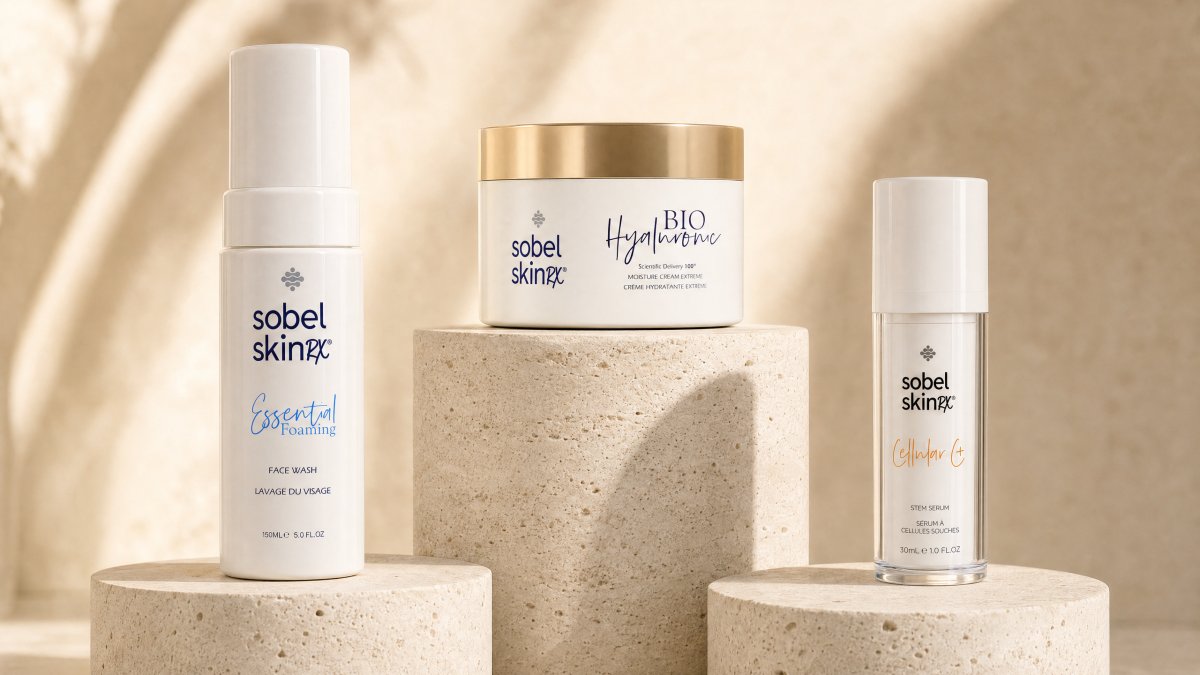
Start with the lowest effective frequency and build. Most people can tolerate nightly retinol within six to eight weeks if they ramp up gradually.
Morning Routine: Protect and Prevent
Morning is about defense. Cleanse gently, apply niacinamide to support the barrier, and finish with a broad-spectrum sunscreen. Sun exposure undoes more collagen than any serum can rebuild, so this step is not optional.
Evening Routine: Repair and Renew
Evening is where the active work happens. Cleanse, apply treatment, moisturize. Alternate your retinol nights with your exfoliation nights and keep one full rest night per week.
| Step | Product Type | Frequency | Primary Job |
|---|---|---|---|
| Cleanse | Glycolic cleanser | Daily | Remove oil and debris |
| Treat (AM) | Niacinamide serum | Daily | Barrier and pore support |
| Treat (PM) | Retinol treatment | 3-5 nights weekly | Turnover and collagen |
| Exfoliate | Peel concentrate | Once weekly | Surface resurfacing |
| Protect | Sunscreen | Every morning | Prevent collagen loss |
Comparing Clinical Strength Options: What to Look For
When comparing clinical strength skincare, look at three things: active concentration, delivery system, and what the formula leaves out. Concentration without a delivery system just means irritation.
Here is how our own lineup maps against those criteria:
| Product | Key Active | Best For | Price |
|---|---|---|---|
| 4.5% Retinol Night Treatment | 4.5% retinol with SD-100 delivery | Fine lines, breakouts, uneven tone | $120.00 |
| 15% Niacinamide Gel Serum | 15% niacinamide | Enlarged pores, oily and acne-prone skin | $86.00 |
| 30% Glycolic Acid Peel Concentrate | 30% glycolic acid | Texture, sun damage, dullness | $60.00 |
| 27% Glycolic Acid Facial Cleanser | 27% glycolic acid | Daily exfoliation, excess oil | $52.00 |
What most reviews miss is the delivery system. A 4.5% retinol released all at once will irritate almost anyone. The same concentration released over several hours is usable nightly. That distinction does not show up on a label, and it is the one that decides whether you finish the bottle.

Every Sobel Skin Rx formula is free from parabens, fragrances, phthalates, sulfates, and emulsifiers, which matters if your skin reacts to added scent or harsh surfactants.
U.S. Food and Drug Administration overview of cosmetic ingredients
Common Mistakes When Using Clinical Strength Skincare for Acne and Wrinkles
The most common mistake is starting at full strength every night. Clinical actives reward patience and punish enthusiasm.
Others we see repeatedly:
- Layering too many actives at once. Retinol, glycolic acid, and vitamin C on the same night is a recipe for a compromised barrier.
- Quitting at week three. Retinol purging is real and temporary. Most people stop right before results begin.
- Skipping moisturizer because skin is oily. Oily skin still needs barrier support, especially on actives.
- Buying based on percentage alone. A higher number is not better if the formula cannot deliver it without irritation.
Conclusion: Your Next Step Toward Clearer, Firmer Skin
Acne and wrinkles respond to the same fundamentals: consistent actives, a supported barrier, and daily sun protection. Get those three right and most of the rest takes care of itself.
At Sobel Skin Rx, every formula is developed by board-certified dermatologist Dr. Howard Sobel, M.D., with concentrated actives, time-released delivery, and no parabens, fragrances, phthalates, sulfates, or emulsifiers. Our 4.5% Retinol Night Treatment and 15% Niacinamide Gel Serum are the two products we would start with for combined acne and fine lines.
Get started with Sobel Skin Rx and build a routine your skin can actually keep up with. Take 20% off your first order with code WELCOME26.
Frequently Asked Questions
Can you use anti-aging products if you have acne-prone skin?
Yes, but you need formulas designed for both concerns. Clinical strength skincare pairs ingredients like retinol and niacinamide that address fine lines while also reducing breakouts and oil production. The 4.5% Retinol Night Treatment from Sobel Skin Rx is clinically proven to decrease the length and depth of lines and wrinkles while minimizing breakouts. Start with a lower frequency, two to three nights per week, then build up as your skin adjusts.
What ingredients should I look for to treat both acne and wrinkles?
Retinol, niacinamide, and glycolic acid are the best ingredients for adult acne and wrinkles. Retinol boosts collagen and speeds cell turnover to fight both concerns. Niacinamide reinforces collagen production while reducing enlarged pores and oil. Glycolic acid exfoliates dead cells to improve texture and unclog pores. A 15% Niacinamide Gel Serum and a 4.5% Retinol Night Treatment cover both concerns without needing separate products for each.
How long does it take to see results from clinical strength skincare?
Most people notice improved skin texture and reduced breakouts within four to six weeks of consistent use. Fine lines and firmness improvements typically appear between eight and twelve weeks. Retinol-based treatments work gradually because they rebuild collagen over time. Using your clinical strength skincare routine every day, without skipping nights, is the fastest path to visible change. Take a photo each week to track progress accurately.
Is it safe to combine retinol with acne treatments?
Retinol can be combined with acne treatments, but timing matters. Use your retinol night treatment on its own in the evening and keep acne-focused products like glycolic acid cleansers for the morning. The 27% Glycolic Acid Facial Cleanser in the morning and 4.5% Retinol Night Treatment at night is a safe pairing. If irritation appears, reduce retinol to every other night until your skin adjusts. Always apply moisturizer after retinol to reduce dryness.
Cleveland Clinic overview of retinol and skin aging

Comments (0)
Back to Beauty