
Last Updated: October 24, 2026
Quick Summary
A stem cell serum benefits mature skin by pairing plant stem cell extracts, used for antioxidant and skin-conditioning support, with vitamin C that helps support collagen production, even tone, and refine texture. Expect first changes in texture and glow within four to six weeks, with fine lines and dark spots improving around three months of daily use.
- Plant stem cell extracts are cosmetic ingredients, not living cells, and do not replace human skin cells.
- Judge the whole formula: vitamin C form, supporting humectants, opaque packaging, and fragrance-free status.
- Layer vitamin C serum first on clean, dry skin, then moisturizer and SPF 30 or higher.
- Patch test for two to three days and start once daily, every other day if needed.
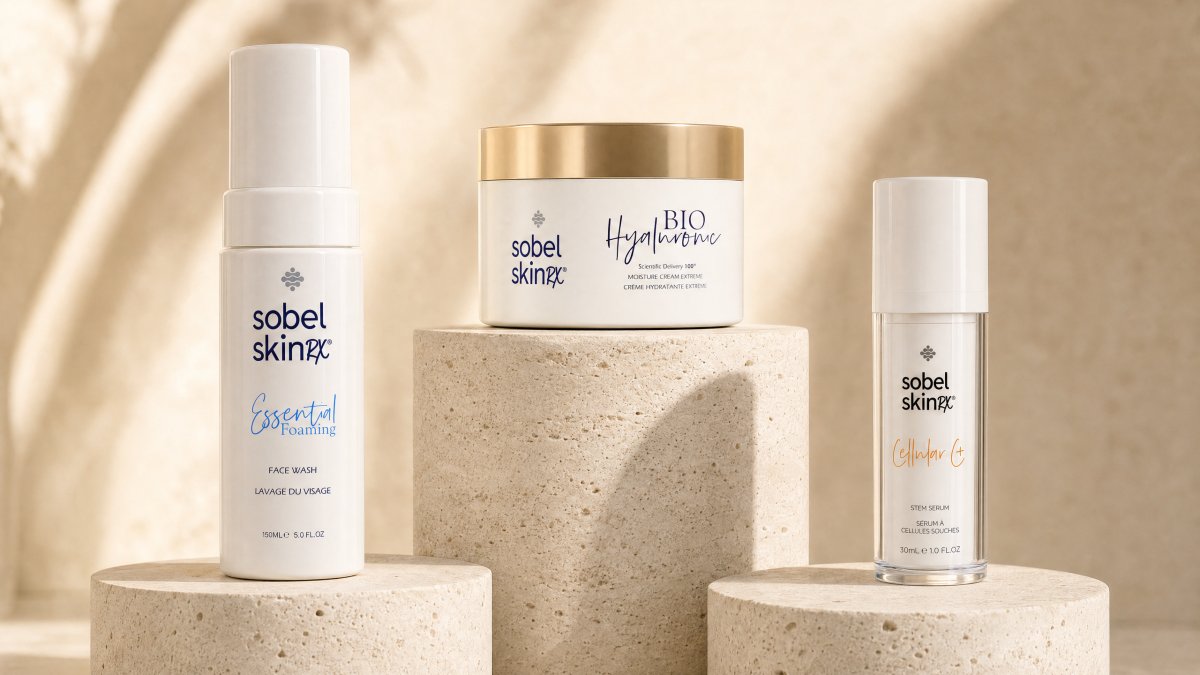
- Our Cellular C+ STEM SERUM is $110.00, with 20% off a first order using code WELCOME26.
Table of Contents
- Why Mature Skin Needs Vitamin C and Stem Cells
- The Benefits of Plant Stem Cells in Skincare
- How Vitamin C Supports Collagen, Firmness, and Radiance
- Fading Dark Spots and Defending Against Sun Damage
- How to Layer Vitamin C Serum in a Mature-Skin Routine
- Choosing the Best Vitamin C Serum for Aging Skin
- Realistic Timelines, Limitations, and Tolerability
- Conclusion
- Frequently Asked Questions
Why Mature Skin Needs Vitamin C and Stem Cells
Normal skin contains high concentrations of vitamin C, which supports collagen synthesis, according to research published in the NIH's PubMed Central database. After 40, that natural reserve declines while collagen production slows, and the visible result is thinner skin, deeper lines, and a duller complexion. This guide from Sobel Skin Rx explains what vitamin C stem cell serum benefits for mature skin actually look like in practice, which claims hold up, and how to build a routine that delivers them.
What Changes in Skin After 40
Three shifts happen at once. Collagen density drops, so skin loses firmness and elasticity. Cell turnover slows, which leaves dead cells on the surface and dulls light reflection. And cumulative UV exposure shows up as dark spots, uneven tone, and photoaging. A serum that only hydrates cannot address all three. You need antioxidant protection, collagen support, and a texture-smoothing mechanism working together.
The Benefits of Plant Stem Cells in Skincare
Plant stem cells in skincare are extracts from plant tissue, most often fruit, that are used in formulas for their antioxidant and skin-conditioning properties, not because they replace human skin cells. That distinction matters. A stem cell serum does not transplant new cells into your face. It delivers plant-derived compounds that support the skin's own repair environment.
What "Stem Cell" Actually Means on a Label
On an ingredient label, "stem cell" usually refers to a plant cell culture extract, such as orange stem cell extract. These extracts are formulated for antioxidant support and to help skin look firmer and more resilient. If you want to verify what a product actually contains, our guide on how to read skincare ingredient labels walks through the INCI list line by line.
It helps to separate three things that get blurred in marketing:
- Plant stem cell extracts are cosmetic ingredients. They are cultured from plant tissue and used for antioxidant and conditioning effects. They are not living cells when they reach your skin.
- Human stem cell treatments are medical procedures, such as bone marrow transplants, and have nothing to do with a topical serum. No over-the-counter skincare product contains human stem cells.
- "Stem cell" as a marketing term can appear on a label even when the extract is present at a very low concentration. The word describes the ingredient source, not a guaranteed result.
What the Evidence Supports, and What It Doesn't
The evidence for plant stem cell extracts is ingredient-level, not finished-product-level. That means laboratory and early studies suggest certain extracts have antioxidant and skin-conditioning activity, but there is little published evidence that a specific finished serum delivers visible anti-aging results because of the stem cell extract alone. Most of the visible benefit in a well-made serum comes from the vitamin C and the hydration and barrier support around it.
A practical way to read claims:
- Supported by ingredient research: antioxidant protection, reduced appearance of oxidative stress, improved skin conditioning when paired with humectants.
- Plausible but not proven for every formula: firmer-looking skin, improved resilience, a more even tone.
- Not supported: replacing lost cells, regrowing tissue, or reversing structural aging.
How to Judge a Stem Cell Serum Formula
Because the extract is only one part of the formula, judge the whole product:
- Vitamin C form and concentration. L-ascorbic acid has the strongest evidence for collagen support, but it is unstable. Derivatives are more stable but have less direct evidence. A formula that pairs a stable vitamin C with plant extracts is usually a better bet than one that leads with the stem cell claim.
- Supporting ingredients. Hyaluronic acid, aloe, and other humectants improve hydration, which mature skin needs. Antioxidants such as vitamin E can help stabilize vitamin C.
- Packaging. Opaque or air-restrictive packaging limits oxidation. A clear dropper bottle is a warning sign for L-ascorbic acid formulas.
Our Cellular C+ STEM SERUM is built around this framework: a stable vitamin C paired with orange stem cells, hyaluronic acid, and aloe in a water-light, fragrance-free base. It is formulated to help even tone, refine texture, reduce the look of dark spots, and support collagen production at $110.00. As a first order, you can take 20% off with code WELCOME26.

How Vitamin C Supports Collagen, Firmness, and Radiance
Vitamin C is the most evidence-backed antioxidant in topical skincare, and its collagen role is the reason. Topical L-ascorbic acid is the only form of vitamin C with peer-reviewed evidence supporting collagen synthesis stimulation, per clinical guidance from Phyto-C.
The benefits stack in a specific order:
- Antioxidant defense neutralizes free radicals from UV exposure and pollution before they degrade collagen.
- Collagen support helps maintain skin firmness and elasticity.
- Brightening interrupts excess pigment production, which evens out skin tone.
- Texture refinement supports smoother skin and a more supple feel.
Harvard Health Publishing reports that daily use of a vitamin C formulation for at least three months improved the appearance of fine and coarse wrinkles (Harvard Health Publishing, 2021). That is the timeline to plan around.
Fading Dark Spots and Defending Against Sun Damage
Photoaging is cumulative, and vitamin C addresses it from two directions. It improves photoaging through antioxidant and photoprotective effects, according to a systematic review in the Journal of Clinical and Aesthetic Dermatology. It also helps reduce the appearance of dark spots and hyperpigmentation by moderating the pigment pathway.
Neither effect replaces sunscreen. Vitamin C supports skin protection; it does not substitute for SPF. If dark spots are your primary concern, our breakdown of vitamin C serum for dark spots covers application and layering in more detail.
How to Layer Vitamin C Serum in a Mature-Skin Routine
Layer vitamin C serum first, on clean, dry skin, before moisturizer and sunscreen. A water-based formula absorbs best on bare skin, and applying it after a heavier cream blocks penetration.
The morning order we recommend:
- Gentle cleanser
- Vitamin C serum, patted in and left to absorb
- Hyaluronic acid or hydrating serum if skin feels tight
- Moisturizer
- Broad-spectrum sunscreen, SPF 30 or higher
Wait about a minute between the serum and moisturizer. For the full step-by-step, see our guide on how to use vitamin C serum in your morning routine.
Choosing the Best Vitamin C Serum for Aging Skin
The best vitamin C serum for aging skin pairs a stable vitamin C form with supporting antioxidants, and it comes in packaging that protects the formula from light and air. Vitamin C is highly unstable, and dermatological guidance from Houston Methodist notes that poor formulation or storage can render a product ineffective. Four criteria decide it:
| Criterion | What to Look For | Why It Matters |
|---|---|---|
| Vitamin C form | L-ascorbic acid or a stabilized derivative | Only some forms have collagen evidence |
| Supporting actives | Plant stem cell extract, hyaluronic acid, aloe | Antioxidant and hydration support |
| Packaging | Opaque or air-restrictive bottle | Limits oxidation and potency loss |
| Formula base | Water-based, fragrance-free | Absorbs cleanly, suits sensitive skin |
Our Cellular C+ STEM SERUM is built around this framework: a stable vitamin C paired with orange stem cells, hyaluronic acid, and aloe in a water-light, fragrance-free base. It is formulated to help even tone, refine texture, reduce the look of dark spots, and support collagen production at $110.00. As a first order, you can take 20% off with code WELCOME26.
Realistic Timelines, Limitations, and Tolerability
Expect the first changes in texture and glow within four to six weeks, and visible improvement in fine lines and dark spots around the three-month mark. Harvard's observation of wrinkle improvement came after at least three months of daily use, which is the honest benchmark. Our anti-aging results timeline maps out what appears when.
Timelines by Concern
- Texture and glow: four to six weeks of daily use.
- Fine lines and wrinkles: around twelve weeks, based on the Harvard observation.
- Dark spots and uneven tone: eight to twelve weeks, and longer for post-inflammatory marks.
Results vary with concentration, formula stability, how consistently you apply, and how much sun exposure you get. A serum used daily for twelve weeks outperforms a stronger formula used twice a week.
Mature-Skin Tolerability
Mature skin often has a thinner barrier and less natural oil, which makes it more prone to stinging and dryness from active ingredients. A few practical steps reduce the risk:
- Patch test first. Apply a small amount behind the ear or on the inner forearm for two to three days before using it on your face.
- Start once daily, every other day if needed. Begin with a pea-sized amount in the morning and build up as your skin adjusts.
- Layer with hydration. If skin feels tight, apply a hyaluronic acid or hydrating serum after the vitamin C and before moisturizer.
- Avoid stacking strong actives in the same application. Keep vitamin C in the morning and retinoids at night. Exfoliating acids can be used on alternate days.
- Stop if irritation persists. Mild tingling that fades within a minute is common. Persistent stinging, redness, or flaking means the formula or frequency is too much for your skin right now.
Fragrance-free formulas reduce one common irritation trigger, but they do not guarantee zero reaction. If you have rosacea, eczema, or a compromised barrier, introduce the serum slowly and consider asking a dermatologist first.
Limitations Worth Stating Plainly
Vitamin C does not reverse deep structural volume loss, and it will not replace an in-office procedure. It is a maintenance and prevention tool. It also does not replace sunscreen. If dark spots are your primary concern, our breakdown of vitamin C serum for dark spots covers application and layering in more detail.
Conclusion
Mature skin asks a lot of one product: collagen support, brightness, texture, and protection from further damage. Meeting all four takes a formula built for it, not a generic antioxidant serum. Sobel Skin Rx develops dermatologist-formulated, fragrance-free skincare with concentrated actives, including our Cellular C+ STEM SERUM with orange stem cells and hyaluronic acid, designed to support firmness, even tone, and radiance.
Frequently Asked Questions
What are the primary benefits of using vitamin C on mature skin?
Vitamin C does three jobs that matter most after 40. It supports collagen synthesis, which normal skin relies on for firmness, and it acts as an antioxidant against free radicals from UV exposure and pollution. It also helps brighten a dull complexion and even out tone. Harvard Health Publishing notes that daily use of a vitamin C formulation for at least three months improved the appearance of fine and coarse wrinkles. Topical L-ascorbic acid is the form with peer-reviewed evidence behind collagen stimulation.
How do plant stem cells improve skin elasticity and texture?
The benefits of plant stem cells in skincare come from what they carry, not from living cells grafting onto your face. These extracts supply antioxidants and peptides that support skin resilience, and they pair well with vitamin C because both target oxidative stress. In a stem cell serum, look for the combination to be described plainly: brightening from vitamin C, elasticity support from the stem cell extract. Note that research on the combined formula is thinner than the research on vitamin C alone.
Can you use vitamin C and stem cell serums together in one routine?
Yes, and many formulas combine them in a single product, which removes the guesswork. If you use separate serums, apply the thinner, water-based one first and let it absorb before the next layer. Vitamin C pairs well with hyaluronic acid and sunscreen. Give retinoids their own slot, either at night or on alternate evenings, because stacking strong actives in one sitting raises irritation risk on mature or sensitive skin. Patch test any new combination for a few days first.
How long does it take to see results from vitamin C and stem cell treatments?
Plan on three months before judging a vitamin C serum. The Harvard Health observation period was at least three months for visible improvement in fine and coarse wrinkles, and collagen changes build slowly. Brightening and glow often show up sooner, within a few weeks, while dark spots and texture take longer. Photograph your skin in the same light each month so you are comparing evidence rather than memory. If nothing changes after 12 weeks of consistent use, reassess the formula.


Comments (0)
Back to Beauty